
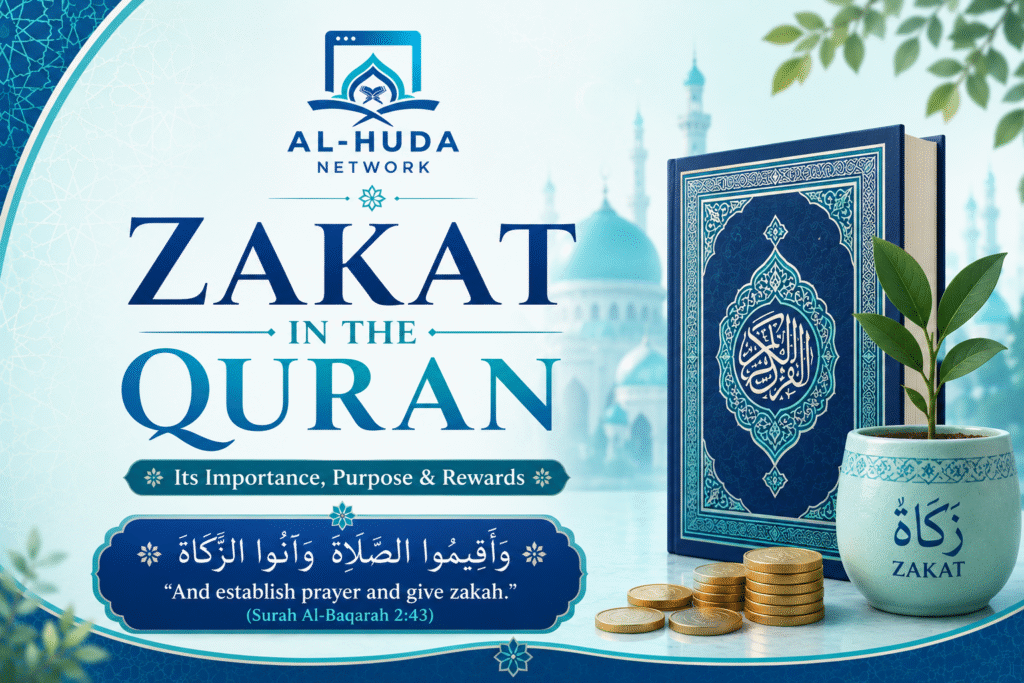
Why Zakat Matters in Islam and Modern Life
Money can bring comfort, security, and opportunity. But it can also create stress, greed, anxiety, and distance from Allah when wealth becomes the centre of life. Across the UK today, many Muslims are struggling to balance rising living costs, family responsibilities, and spiritual priorities. Parents in Birmingham worry about bills while trying to raise practising children. Young professionals in London work long hours but still feel spiritually empty. Students in Manchester want to fulfil Islamic obligations but remain confused about what Islam actually teaches about charity and wealth.
This is why understanding zakat in the Quran is more important than ever. Zakat is not simply a yearly payment or a Ramadan tradition. It is one of the pillars of Islam and one of the clearest signs of faith, compassion, and obedience to Allah. The Quran repeatedly connects zakat with salah because Islam does not separate worship from social responsibility. A believer’s relationship with Allah should naturally lead to helping others.
In this guide, you will discover the most important Quran verses about zakat, the spiritual meaning behind zakat, who must pay it, who can receive it, and how zakat purifies wealth and the heart. You will also learn practical lessons for Muslims living in the UK today and how understanding the Qur’an deeply can transform your relationship with money, generosity, and faith.
What Is Zakat in Islam?
Zakat is one of the five pillars of Islam and an obligation upon financially eligible Muslims. The word “zakat” comes from an Arabic root meaning purification, growth, and blessing. This meaning is incredibly powerful because zakat does not decrease wealth in reality. Instead, it purifies wealth spiritually and increases barakah in life.
Many Muslims confuse zakat with general charity. While sadaqah is voluntary and can be given anytime, zakat is compulsory once a Muslim’s savings reach a certain threshold known as nisab. Allah made zakat obligatory not only to support the poor but also to protect believers from greed and excessive attachment to worldly possessions.
The Quran repeatedly reminds Muslims that wealth is a trust from Allah. Everything we own ultimately belongs to Him. Zakat teaches believers humility by reminding them that success and provision are gifts from Allah, not personal achievements alone.
For Muslims living in cities like London, Bradford, Leicester, and Leeds, zakat also creates stronger community support. It helps struggling families, supports reverts, assists refugees, and strengthens Islamic social responsibility across society.
Literal Meaning of Zakat
The literal meaning of zakat highlights purification and growth. Islam teaches that when believers give sincerely for Allah’s sake, their wealth becomes spiritually cleaner and more blessed. This understanding changes how Muslims view charity entirely.
Instead of seeing zakat as a financial loss, believers begin seeing it as an investment for both dunya and akhirah. Allah promises reward, purification, and increased blessings for those who give sincerely.
Zakat vs Sadaqah
Although both involve helping others, zakat and sadaqah are different acts of worship.
- Zakat is compulsory upon eligible Muslims once wealth reaches the nisab threshold and a lunar year has passed over those savings.
- Sadaqah is voluntary charity that can be given anytime, in any amount, and even through small acts of kindness or service.
- Zakat has specific categories of recipients mentioned clearly in the Qur’an, while sadaqah can be broader and more flexible.
- Zakat focuses on purification and obligation, while sadaqah focuses on additional generosity and compassion beyond duty.
Zakat in Quran: The Most Important Quranic Verses
The Quran speaks about zakat repeatedly because financial responsibility is deeply connected to faith. Allah mentions zakat alongside salah in many verses, showing its importance in the life of a believer.
Surah Al-Baqarah (2:43)
وَأَقِيمُوا الصَّلَاةَ وَآتُوا الزَّكَاةَ
“And establish prayer and give zakat.”
This short verse carries enormous meaning. Allah places salah and zakat side by side, showing that worship is incomplete when Muslims ignore the needs of others. Prayer strengthens the relationship with Allah, while zakat strengthens the relationship with society.
For UK Muslims today, this verse is a reminder that practising Islam is not limited to personal spirituality. Islam also requires social care, financial honesty, and compassion toward vulnerable people.
In many UK communities, local mosques and charities rely heavily on zakat to support struggling families, food banks, and educational projects. This verse encourages Muslims to see giving as an essential act of worship rather than an optional good deed.
Surah At-Tawbah (9:103)
خُذْ مِنْ أَمْوَالِهِمْ صَدَقَةً تُطَهِّرُهُمْ وَتُزَكِّيهِم بِهَا
“Take from their wealth a charity by which you purify them and cause them to increase.”
This is one of the clearest Quran verses about zakat. Allah explains directly that zakat purifies believers spiritually. Wealth can easily create arrogance, selfishness, and attachment to dunya. Zakat removes these diseases from the heart.
Many Muslims in Britain today face pressure to constantly earn more, spend more, and compare lifestyles online. This verse reminds believers that true success is not measured by possessions but by closeness to Allah and generosity toward creation.
Powerful Lessons from Quranic Zakat Verses
- The Quran links zakat with prayer repeatedly to show that worship includes both devotion to Allah and care for humanity.
- Zakat purifies the heart from greed and reminds believers that wealth is only a temporary trust from Allah.
- Quranic teachings on zakat encourage economic justice by ensuring wealth circulates throughout the community instead of remaining among the rich.
- The verses about zakat build compassion and strengthen unity within Muslim societies during times of hardship and uncertainty.
Why Is Zakat So Important in the Quran?
One of the most remarkable things about zakat in the Quran is how often Allah connects it with salah. Scholars explain that prayer builds the spiritual relationship between humans and Allah, while zakat protects society from injustice and neglect.
Islam does not encourage selfish spirituality. A Muslim cannot ignore poverty, suffering, or hunger while claiming strong faith. That is why zakat remains central to Islamic teaching.
The Quran also teaches that wealth itself is a test. Some people become grateful through wealth, while others become arrogant and forget Allah completely. Zakat helps believers remain humble and connected to the needs of others.
In modern Britain, where financial pressure affects many households, zakat also creates hope and community support. Refugees, struggling families, converts to Islam, widows, and people facing debt often depend on zakat support from the Muslim community.
Spiritual Benefits of Zakat
- Giving zakat softens the heart and increases compassion toward people facing financial hardship and emotional struggles.
- Zakat protects believers from greed by reminding them that worldly possessions cannot bring lasting happiness or peace.
- Helping others sincerely for Allah’s sake increases barakah in wealth, family life, health, and emotional well-being.
- Zakat strengthens unity within the ummah by creating responsibility and care between different members of society.
How Zakat Purifies Wealth and the Heart.
Many Muslims understand zakat as a financial obligation but fail to appreciate its deeper spiritual impact. The Quran teaches that zakat purifies not only money but also the soul itself.
When believers give sincerely, they fight against greed, selfishness, pride, and attachment to dunya. They begin trusting Allah more deeply and worrying less about material security. This emotional transformation is one of the greatest hidden blessings of zakat.
In the UK today, many Muslims experience anxiety about money despite stable jobs and comfortable lifestyles. Islam teaches that true peace does not come from endless accumulation but from gratitude, generosity, and trust in Allah.
Zakat also purifies society by reducing inequality and strengthening compassion between people. Wealthy Muslims become more aware of community struggles, while vulnerable people receive support with dignity.
Ways Zakat Purifies Believers
- Zakat removes excessive attachment to wealth and reminds believers that everything ultimately belongs to Allah alone.
- Giving regularly increases gratitude and helps Muslims appreciate the blessings they already possess in life.
- Supporting vulnerable people builds empathy and strengthens emotional awareness within families and communities.
- Zakat creates inner peace because believers know they are fulfilling an obligation beloved to Allah.
Who Must Pay Zakat?
Zakat becomes obligatory upon a Muslim when they own wealth that reaches the minimum threshold known as nisab and that wealth remains in their possession for one complete lunar year, known as hawl. In Islam, zakat is not simply a donation or a cultural Ramadan habit. It is a serious act of worship and one of the five pillars of Islam.
Allah commands believers in the Qur’an:
“Establish prayer and give zakat.”
Surah Al-Baqarah 2:43
This shows that zakat is directly connected with salah and is part of a Muslim’s duty to Allah. Prayer builds the believer’s relationship with Allah, while zakat reflects obedience, compassion, and responsibility towards people in need.
The Prophet Muhammad ﷺ also said that Islam is built upon five pillars, including establishing prayer and paying zakat. This hadith makes it clear that zakat is not optional for those who meet its conditions.
Another important hadith explains the purpose of zakat clearly. When the Prophet ﷺ sent Mu’adh ibn Jabal رضي الله عنه to Yemen, he instructed him to teach people that Allah had made zakat obligatory upon them. It would be taken from the wealthy among them and given to the poor among them. This shows that zakat is a system of worship, purification, and social care.
For Muslims living in the UK, zakat may become due on savings, gold, silver, business stock, investments, rental income savings, and other zakatable assets. A salaried professional, business owner, freelancer, student, or online seller may all need to calculate zakat if their wealth reaches the nisab level and remains there for one lunar year.
Islam does not burden people unfairly. A Muslim who does not own wealth above the nisab threshold is not required to pay zakat. Those facing genuine financial hardship may themselves be eligible to receive zakat rather than pay it.
Conditions That Make Zakat Obligatory
Zakat is only required when certain Islamic conditions are met. These conditions help Muslims understand whether they are responsible for paying zakat.
- The person must be Muslim because zakat is an Islamic act of worship and one of the pillars of Islam.
- The wealth must reach the nisab threshold, which is the minimum amount of wealth required before zakat becomes compulsory.
- The wealth must remain above nisab for one lunar year, known as hawl, in most common zakat cases such as savings, gold, silver, and business assets.
- The person must have full ownership of the wealth, meaning they can use, access, or control it.
- The wealth must be surplus to basic needs, such as essential food, clothing, rent, bills, and necessary family expenses.
- The wealth should be zakatable, such as cash savings, gold, silver, business stock, trade goods, and certain investments.
- Immediate debts and necessary liabilities may be considered, depending on the situation and scholarly guidance.
- The intention should be for Allah’s sake, because zakat is not only a financial payment but an act of worship and purification.
Common Wealth Categories Subject to Zakat
Several types of wealth may be subject to zakat when they reach nisab and meet the required conditions.
- Cash and bank savings may become zakatable if they remain above the nisab threshold for one lunar year.
- Gold and silver are commonly included in zakat calculations, including jewellery, although some details may differ according to scholarly opinion.
- Business stock and trade goods usually require zakat if they are bought and sold for profit.
- Investments, shares, and certain assets may require zakat depending on their purpose, value, and income structure.
- Freelance and online business earnings may become zakatable once the saved amount reaches nisab and remains for the required period.
- Rental income savings may be zakatable if the income is saved and reaches the nisab threshold.
- Digital assets and modern financial holdings should be reviewed carefully with qualified Islamic guidance because their zakat treatment can vary.
Who Does Not Have to Pay Zakat?
Not every Muslim is required to pay zakat. Islam is fair and does not place financial responsibility on those who do not have enough wealth.
A Muslim does not have to pay zakat if their wealth is below the nisab threshold, if they are struggling to meet basic living costs, or if their savings do not remain above nisab for a complete lunar year. People who are in serious financial difficulty, overwhelmed by debt, or unable to cover essential needs may not be zakat payers. In some cases, they may actually qualify as zakat recipients.
This is why zakat should be calculated carefully. It is not based only on income, salary, or job title. A person may earn a good monthly wage but have no zakatable savings after essential expenses. Another person may be a student or freelancer but still have savings above nisab. The key issue is not social status, but zakatable wealth.
Simple UK Zakat Reminder
For Muslims in the UK, the safest approach is to review zakat once every Islamic year. Choose a fixed zakat date, check your cash, savings, gold, silver, business stock, and investments, then compare the total with the current nisab value. If your zakatable wealth is above nisab, the usual zakat amount is 2.5%.
Because some areas of zakat can differ by scholarly opinion, especially gold jewellery, pensions, shares, business assets, and debts, Muslims should seek guidance from a qualified scholar or trusted Islamic organisation when unsure. This protects the worship, removes confusion, and helps ensure zakat is paid correctly for the sake of Allah.
Who Can Receive Zakat According to the Quran?
Allah clearly defines zakat recipients in Surah At-Tawbah (9:60). This ensures fairness, transparency, and proper distribution within society.
The Quran identifies categories including the poor, the needy, those in debt, travellers, zakat administrators, and people whose hearts are being reconciled toward Islam.
In the UK context, zakat may support struggling families facing inflation, refugees rebuilding lives, reverts needing community assistance, and students struggling financially.
Important Categories of Zakat Recipients
- Poor families lacking sufficient income for basic needs can receive zakat support to restore dignity and stability.
- Muslims trapped in serious debt may qualify for zakat assistance when repayment becomes genuinely overwhelming.
- Reverts to Islam often require emotional and financial support while adjusting to major life changes and family challenges.
- Travellers and displaced individuals experiencing hardship may also qualify according to Quranic guidance and scholarly explanation.
Common Mistakes Muslims Make About Zakat
Despite the importance of zakat, many Muslims misunderstand or delay this obligation unnecessarily. Some treat zakat as a Ramadan-only tradition instead of a serious pillar of Islam.
Others calculate incorrectly or give without checking whether recipients qualify according to Islamic guidance. Some believers also assume zakat decreases wealth, even though the Qur’an repeatedly promises blessings through giving.
Mistakes to Avoid
- Delaying zakat payments unnecessarily can weaken spiritual discipline and prevent timely support for those genuinely in need.
- Calculating zakat incorrectly may result in underpaying obligations or creating confusion about financial responsibilities.
- Giving zakat without checking eligibility can prevent proper distribution to categories clearly mentioned within the Quran.
- Treating zakat as a cultural tradition rather than an act of worship reduces its spiritual impact and emotional significance.
Practical Zakat Plan for Muslims Living in the UK
Building a consistent zakat routine helps Muslims fulfil obligations confidently and avoid yearly stress. In modern Britain, digital banking and online finance make wealth management easier but sometimes more confusing.
Creating a simple annual system can help believers stay organised while maintaining sincerity and spiritual focus.
Practical Steps for Better Zakat Management
- Track savings monthly so zakat calculations become easier and more accurate throughout the year.
- Use trusted Islamic zakat calculators that follow authentic scholarly guidance and transparent financial principles.
- Teach children about zakat early so generosity becomes a natural Islamic value within family life and daily habits.
- Support trustworthy charities and educational organisations that demonstrate transparency and genuine community impact.
How Al Huda Network UK Helps Muslims Understand Quranic Teachings
At Al Huda Network UK, we believe Muslims should not only recite the Quran but also understand its message deeply. Many students across London, Birmingham, Manchester, and Bradford join our classes because they want practical and authentic Islamic understanding.
Our qualified male and female teachers help children, adults, and reverts learn the Quran with meaning, reflection, and spiritual connection. We focus on Tajweed, understanding Quranic verses, Islamic values, and personal growth.
For many families, online Quran learning provides flexibility, safety, and consistency while balancing busy UK lifestyles. Students learn comfortably from home while receiving personalized guidance from experienced teachers.
Why Families Choose Al Huda Network UK
- Qualified Quran teachers provide authentic Islamic education with strong focus on understanding and practical life application.
- Flexible online schedules support busy UK families balancing work, school, university, and daily responsibilities.
- Structured lessons help children and adults learn Quranic teachings gradually without feeling overwhelmed or discouraged.
- Strong emphasis on spirituality and character development helps students build lifelong connection with the Qur’an.
Why You Can Trust This Guide
This guide has been created using authentic Quranic references, recognised scholarly explanations, and practical Islamic teaching experience with UK Muslim learners. Every section has been carefully written to ensure clarity, trustworthiness, and relevance.
At Al Huda Network UK, we focus on authentic Islamic education rooted firmly in the Quran and Sunnah. Our teaching approach combines traditional Islamic knowledge with practical guidance suitable for modern Muslim life in Britain.
Our experience teaching children, professionals, reverts, and families across the UK has shown that Muslims need simple but trustworthy explanations of Islamic obligations like zakat. That is why we prioritise clarity, authenticity, and real-life application.
Why you should choose Alhuda Network
- Years of experience teaching Quran recitation, Tajweed, Islamic studies, and Quran understanding to UK-based Muslim learners.
- Qualified teachers who combine authentic Islamic scholarship with compassionate and student-friendly teaching methods.
- Structured educational systems designed specifically for modern Muslim families living within busy British lifestyles.
- Commitment to trustworthy Islamic guidance based upon Qur’an, authentic Hadith, and recognised scholarly understanding.
Quick Summary: What the Quran Teaches About Zakat
The Quran presents zakat as a pillar of Islam and a powerful act of spiritual purification. Allah repeatedly connects zakat with salah to show that true faith includes worship, generosity, and social responsibility.
The Quranic teachings on zakat emphasise helping the poor, purifying wealth, reducing greed, and building stronger communities. Zakat is not merely a financial charity. It is an act of obedience, compassion, and trust in Allah.
For Muslims living in the UK today, understanding zakat deeply can transform both personal spirituality and community life.
Final Thoughts on Zakat in the Quran
Understanding zakat in the Quran changes the way believers view wealth completely. The Quran teaches that money is not only for personal comfort but also a test of gratitude, compassion, and responsibility. Through zakat, Allah purifies wealth, softens hearts, and strengthens entire communities.
In today’s world, where financial anxiety and materialism dominate so much of life, zakat reminds Muslims to trust Allah more deeply and care for others sincerely. Whether you live in London, Manchester, Birmingham, Bradford, or anywhere else in the UK, fulfilling zakat with understanding can bring barakah into your wealth and peace into your heart.
Do not let zakat become a rushed Ramadan habit or confusing yearly calculation. Study it properly, understand its Quranic wisdom, and make it part of your spiritual growth.
And if you want to understand the Quran more deeply with qualified teachers and authentic guidance, Al Huda Network UK is here to help you strengthen your connection with Allah’s words from the comfort of your home.
FAQs
1. How many times is zakat mentioned in the Quran?
Zakat is mentioned many times throughout the Qur’an, often alongside salah. This repeated connection highlights the importance of balancing worship of Allah with social responsibility and compassion toward others.
2. What is the most important Quran verse about zakat?
One of the most powerful verses is Surah At-Tawbah 9:103, where Allah explains that zakat purifies believers and their wealth spiritually and emotionally.
3. Is zakat compulsory for every Muslim?
Zakat becomes compulsory only for Muslims whose wealth reaches the nisab threshold and remains above that amount for one lunar year.
4. Does zakat reduce wealth?
Islam teaches the opposite. Zakat brings barakah, purification, and blessings into wealth, family life, and emotional well-being.
5. Can zakat be given online in the UK?
Yes. Many Muslims in the UK now give zakat online through trusted Islamic charities and transparent donation platforms.
6. What is the difference between zakat and sadaqah?
Zakat is compulsory charity with fixed rules and recipients, while sadaqah is voluntary charity that can be given anytime for extra reward.
7. Can students pay zakat?
Students only pay zakat if their savings or assets exceed the nisab threshold for a full lunar year.
8. Why is zakat linked with salah in the Quran?
The Quran repeatedly links prayer and zakat because Islam combines devotion to Allah with care and responsibility toward society.