
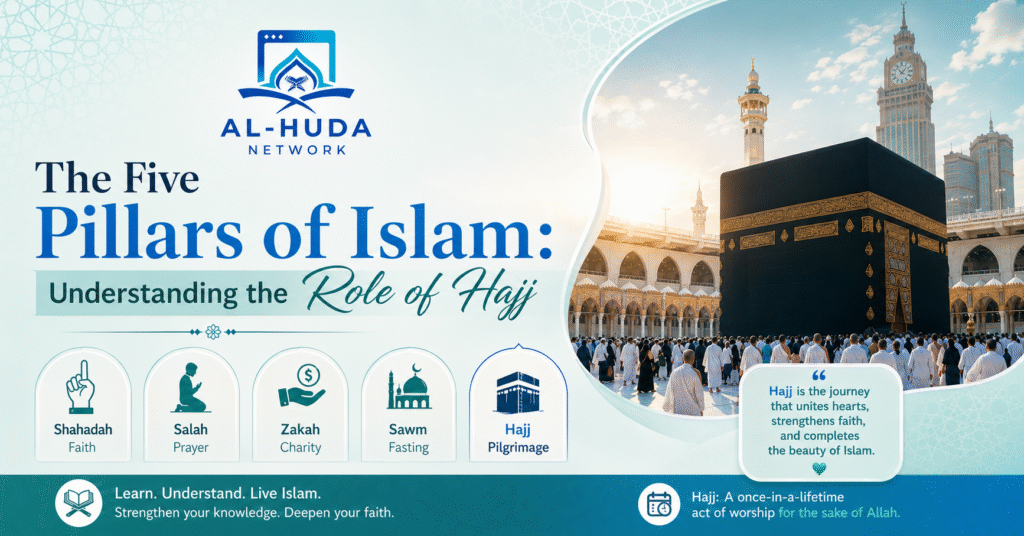
Why Understanding Hajj Matters in Modern Muslim Life
Every Muslim carries a deep desire to feel closer to Allah. In today’s fast-moving world, especially for Muslims living in the UK, it can sometimes feel difficult to stay spiritually connected while balancing work, studies, family life, and daily responsibilities. A parent in Birmingham worries about raising practising children. A university student in Manchester struggles to balance deen and dunya. A young professional in London wants success but also longs for spiritual peace. In moments like these, understanding the five pillars of Islam becomes more important than ever.
The five pillars are not simply religious duties. They are the foundation of a Muslim’s entire life. They shape belief, worship, character, discipline, and connection with Allah. Among these pillars, Hajj holds a very special place because it combines sacrifice, patience, unity, worship, and complete submission to Allah in one powerful journey.
Understanding the role of Hajj in Islam helps Muslims appreciate the deeper wisdom behind this sacred pilgrimage. It is not only a physical journey to Makkah. It is a spiritual transformation that changes hearts, strengthens faith, and reminds believers that this world is temporary.
In this complete guide, you will learn what the Quran says about Hajj, why it is the fifth pillar of Islam, the spiritual lessons behind every ritual, and how Muslims in the UK can prepare themselves and their families for this life-changing act of worship.
What Are the Five Pillars of Islam?
The five pillars of Islam are the core foundations upon which every Muslim builds their faith and daily life. They are essential acts of worship that connect believers to Allah while also developing discipline, sincerity, compassion, and spiritual strength.
The Prophet Muhammad ﷺ taught that Islam stands upon five pillars. These pillars guide Muslims in every part of life, whether they live in London, Bradford, Leeds, or anywhere else in the world. They are not limited to rituals alone. Each pillar shapes behaviour, morality, and connection with Allah.
The first pillar is Shahadah, the declaration that there is no god but Allah and that Muhammad ﷺ is His Messenger. The second pillar is Salah, the five daily prayers that keep believers spiritually grounded. The third is Zakat, which purifies wealth and supports the needy. The fourth pillar is Sawm during Ramadan, teaching patience and self-control. The fifth pillar is Hajj, the sacred pilgrimage to Makkah for those who are physically and financially able.
Together, these pillars create a complete way of life. They strengthen the relationship between Muslims and Allah while building responsibility toward society and the wider ummah.
Why the Five Pillars Matter in Daily Life
- The pillars create structure and spiritual discipline, helping Muslims stay connected to Allah despite busy modern lifestyles and distractions.
- They teach balance between worship, personal character, family responsibilities, and social compassion within communities.
- Each pillar strengthens a different aspect of faith, allowing Muslims to grow spiritually throughout every stage of life.
- The five pillars unite Muslims globally because believers perform the same acts of worship regardless of culture or nationality.
Why Hajj Holds a Special Place Among the Five Pillars
Among all the pillars, Hajj is unique because it combines physical worship, financial sacrifice, emotional endurance, and spiritual transformation in one journey. Unlike daily prayers or fasting, Hajj often happens once in a lifetime, making it one of the most emotional experiences a Muslim can ever have.
Allah says in the Quran:
وَلِلَّهِ عَلَى النَّاسِ حِجُّ الْبَيْتِ مَنِ اسْتَطَاعَ إِلَيْهِ سَبِيلًا
“Pilgrimage to this House is an obligation by Allah upon whoever is able among the people.”
This verse from Surah Aal-Imran highlights the importance of Hajj clearly. Allah calls believers toward His sacred house, the Kaaba, which was built by Prophet Ibrahim (AS) and his son Ismail (AS). Every year, millions of Muslims leave behind comfort, status, and worldly identity to stand equally before Allah.
For Muslims living in the UK, Hajj often becomes a dream planned over many years. Families save money carefully, attend Hajj seminars in local mosques, and emotionally prepare for the journey. Whether someone comes from Manchester, Leicester, or East London, the feeling is the same — answering Allah’s invitation.
Hajj teaches Muslims that real success is not wealth, fame, or social status. True success is obedience to Allah and preparation for the akhirah.
Powerful Reasons Why Hajj Is So Important
- Hajj reminds Muslims that everyone stands equal before Allah regardless of race, nationality, wealth, or social status.
- The pilgrimage strengthens complete trust in Allah through sacrifice, patience, and sincere acts of worship.
- Hajj revives the legacy of Prophet Ibrahim (AS), teaching submission and unwavering obedience to Allah.
- The journey spiritually cleanses believers and inspires many Muslims to change their lives after returning home.
What Does the Quran Say About Hajj?
The Quran speaks about Hajj repeatedly because this pilgrimage represents obedience, remembrance, unity, and devotion to Allah. The story of Hajj begins with Prophet Ibrahim (AS), who was commanded to build the Kaaba and call humanity toward pilgrimage.
Allah says:
وَأَذِّن فِي النَّاسِ بِالْحَجِّ يَأْتُوكَ رِجَالًا
“And proclaim to the people the Hajj pilgrimage; they will come to you on foot and on every lean camel.”
This verse beautifully captures the timeless call of Hajj. For centuries, Muslims from every corner of the world have answered this invitation. Today, pilgrims travel from cities like London, Birmingham, and Bradford with the same spiritual longing believers carried generations ago.
The Quran also explains that Hajj is not about tourism or cultural tradition. It is an act of worship rooted in remembrance of Allah. During Hajj, Muslims repeatedly engage in dhikr, dua, sacrifice, humility, and repentance.
Another important Quranic teaching about Hajj is taqwa. Allah reminds believers that the true benefit of pilgrimage is spiritual purification and increased consciousness of Him.
Quranic Lessons Muslims Learn from Hajj
- Hajj teaches that obedience to Allah should come before comfort, desires, and worldly distractions.
- The pilgrimage reminds believers about the temporary nature of life and the reality of the Hereafter.
- Quranic teachings about Hajj encourage humility because every pilgrim wears simple clothing and leaves status behind.
- The journey strengthens unity among Muslims by bringing millions together for one purpose – worshipping Allah sincerely.
The Spiritual Meaning Behind Hajj
Many people know the rituals of Hajj but fail to understand their deeper spiritual meanings. Every act during Hajj carries powerful lessons that transform the believer internally.
When pilgrims wear Ihram, they remove symbols of status and luxury. Rich and poor stand equally before Allah. This reminds Muslims that worldly titles and possessions have no value compared to taqwa.
Tawaf around the Kaaba symbolises complete obedience and devotion to Allah. Just as planets orbit in perfect order, Muslims circle the Kaaba showing that Allah should remain the centre of life.
The journey between Safa and Marwah honours Hajar (AS), whose trust in Allah became a timeless example for humanity. Her struggle teaches Muslims patience, hope, and reliance upon Allah even during hardship.
Standing on the plains of Arafah reminds believers of the Day of Judgment when humanity will stand before Allah seeking mercy and forgiveness.
Deep Spiritual Lessons from Hajj Rituals
- Ihram teaches equality and reminds Muslims that worldly appearance and social class hold no value before Allah.
- Tawaf strengthens emotional attachment to Allah by placing worship and remembrance at the centre of life.
- Sa’i between Safa and Marwah teaches perseverance and trust in Allah during moments of fear and uncertainty.
- Arafah encourages repentance and reflection, reminding believers to prepare sincerely for the Hereafter.
Step-by-Step Journey of Hajj Explained for Beginners
Entering the State of Ihram
Pilgrims begin Hajj by entering the sacred state of Ihram. Men wear two simple white cloths while women dress modestly. This removes social differences and creates equality among believers.
The simplicity of Ihram reminds Muslims that every human will eventually return to Allah with nothing except deeds and sincerity.
Tawaf Around the Kaaba
Pilgrims circle the Kaaba seven times while remembering Allah. This is one of the most emotional moments of Hajj because believers stand before the sacred house built for worshipping Allah alone.
Many pilgrims from the UK describe this moment as life-changing because it strengthens emotional connection with Allah deeply.
Sa’i Between Safa and Marwah
Pilgrims walk between Safa and Marwah seven times, remembering the struggle of Hajar (AS). Her story teaches believers that Allah never abandons those who trust Him sincerely.
Standing at Arafah
The Day of Arafah is the heart of Hajj. Pilgrims stand in dua, repentance, and remembrance seeking Allah’s forgiveness and mercy.
The Prophet ﷺ said:
“Hajj is Arafah.”
Important Beginner Lessons About Hajj
- Hajj is not only physical travel but also a journey of spiritual purification and emotional transformation.
- Every ritual during Hajj carries lessons about patience, sacrifice, sincerity, and complete trust in Allah.
- Pilgrims should prepare spiritually before travelling by increasing prayer, Quran recitation, and repentance.
- Learning the meanings behind rituals helps Muslims experience Hajj more deeply instead of simply performing actions mechanically.
Importance of Hajj for Muslims Living in the UK
For Muslims living in Britain today, Hajj carries special emotional significance. Modern life often feels rushed, stressful, and disconnected spiritually. Hajj allows believers to pause worldly distractions and reconnect completely with Allah.
Families in London save for years to afford pilgrimage packages. Parents in Bradford teach children about Makkah and the Kaaba from an early age. Young Muslims in Manchester attend seminars to prepare spiritually before travelling.
Living in a non-Muslim society also creates unique challenges. Many Muslims struggle to maintain strong Islamic identity while balancing careers, studies, and social pressures. Hajj renews faith and reminds believers that their ultimate purpose is worshipping Allah.
How Hajj Benefits UK Muslims Spiritually
- Hajj reconnects Muslims with their Islamic identity and strengthens faith within challenging modern environments.
- The pilgrimage encourages families to prioritise deen over material success and worldly competition.
- British Muslims often return from Hajj with stronger commitment toward salah, Quran learning, and Islamic character.
- Hajj builds unity among Muslims from different ethnic and cultural backgrounds living across the UK.
Common Misconceptions About Hajj
Many Muslims misunderstand important aspects of Hajj because of cultural assumptions or lack of proper Islamic education.
Some believe Hajj is only for older people after retirement. Others think they must become “perfect Muslims” before travelling. In reality, Hajj is a journey of repentance and transformation.
Another misconception is that Hajj removes the need for future effort and repentance. While Hajj can wipe away sins sincerely, believers must continue obeying Allah afterward.
Misunderstandings Muslims Should Avoid
- Waiting until old age unnecessarily may delay a life-changing act of worship that could strengthen faith earlier.
- Thinking only “perfect” Muslims deserve Hajj prevents many believers from seeking Allah’s mercy and forgiveness.
- Assuming Hajj guarantees permanent righteousness without continued effort misunderstands the purpose of spiritual growth.
- Treating Hajj as cultural status rather than sincere worship reduces the spiritual beauty and humility of pilgrimage.
How Al Huda Network UK Helps Families Understand Islam
At Al Huda Network UK, we believe Islamic education should build both knowledge and spiritual connection. Understanding the Quran, the pillars of Islam, and acts of worship like Hajj helps Muslims live confidently and faithfully in modern Britain.
Our qualified male and female teachers help children, adults, and reverts learn Quran recitation, Tajweed, Islamic studies, duas, and understanding of Islamic teachings in a clear and supportive environment.
For busy UK families balancing work, school, and daily responsibilities, online Islamic learning provides flexibility without sacrificing quality education.
Why Families Choose Al Huda Network UK
- Qualified Quran teachers provide authentic Islamic guidance rooted firmly in the Quran and Sunnah.
- Flexible online classes support busy Muslim families living across London, Birmingham, Manchester, and Bradford.
- Structured learning plans help children and adults build strong Islamic understanding gradually and confidently.
- Personalised teaching encourages deeper emotional connection with Quranic teachings and Islamic worship.
Our Approach to Authentic Islamic Learning
This guide has been created using authentic Quranic references, recognised Hadith, and reliable scholarly explanations regarding Hajj and the five pillars of Islam. Every section has been carefully written to provide trustworthy Islamic education suitable for Muslims living in the UK.
At Al Huda Network UK, our teaching approach combines authentic Islamic knowledge with practical understanding of modern Muslim life. We work with students from diverse backgrounds including children, parents, university students, professionals, and reverts.
Our experience teaching Quran and Islamic studies online has shown that Muslims need educational content that is emotionally engaging, spiritually authentic, and easy to understand without compromising reliability.
Our Commitment to Authentic Islamic Education
- Authentic Quranic verses and reliable Hadith references support all major explanations within this guide.
- Qualified teachers with experience teaching UK-based Muslim learners provide structured and practical Islamic education.
- Student-focused learning methods help children and adults understand Islam clearly while building spiritual confidence.
- Strong commitment to trustworthiness ensures educational content remains authentic, respectful, and beneficial for families.
Quick Summary: Understanding the Role of Hajj in Islam
Hajj is the fifth pillar of Islam and one of the most spiritually transformative acts of worship in a Muslim’s life. The Quran presents Hajj as a sacred journey of obedience, repentance, sacrifice, and remembrance of Allah.
Through rituals like Ihram, Tawaf, Sa’i, and Arafah, Muslims learn humility, patience, equality, and complete trust in Allah. Hajj strengthens unity within the ummah while helping believers reconnect with their true purpose in life.
For Muslims living in the UK today, understanding Hajj deeply can inspire stronger faith, better Islamic identity, and greater commitment toward worship and Quran learning.
Conclusion
The five pillars of Islam are the foundation of a believer’s life, and Hajj stands among them as one of the most powerful journeys of spiritual transformation. It teaches Muslims sacrifice, humility, patience, equality, and sincere devotion to Allah.
In today’s busy world, many Muslims feel spiritually disconnected while balancing modern pressures and responsibilities. Hajj reminds believers to pause, reflect, and return sincerely to Allah. Whether you live in London, Birmingham, Manchester, Leeds, or anywhere else in the UK, the lessons of Hajj can transform your heart long before you even travel to Makkah.
Learning about Hajj should not be limited to rituals alone. Muslims should understand its Quranic meanings, emotional lessons, and spiritual wisdom deeply. This understanding builds stronger faith and a closer relationship with Allah.
And if you want your family to grow in Quran understanding, Islamic knowledge, and spiritual confidence, Al Huda Network UK is here to support your journey through authentic and flexible online Islamic education.
Frequently Asked Questions
1. Why is Hajj the fifth pillar of Islam?
Hajj is the fifth pillar because it represents complete submission, sacrifice, and obedience to Allah through a once-in-a-lifetime pilgrimage for eligible Muslims.
2. What does the Quran say about Hajj?
The Quran describes Hajj as an obligation upon capable Muslims and highlights its spiritual lessons of remembrance, unity, taqwa, and devotion to Allah.
3. Is Hajj compulsory for every Muslim?
Hajj becomes obligatory only for Muslims who are physically, financially, and mentally able to perform the pilgrimage safely.
4. What is the difference between Hajj and Umrah?
Hajj occurs during specific Islamic dates and is obligatory once in a lifetime for eligible Muslims, while Umrah is voluntary and can be performed anytime.
5. What spiritual lessons does Hajj teach?
Hajj teaches humility, equality, patience, sacrifice, repentance, sincerity, and complete trust in Allah.
6. Can children learn about Hajj easily?
Yes. Children can understand Hajj through storytelling, visuals, Islamic classes, and learning about Prophet Ibrahim (AS) and the Kaaba.
7. How long does Hajj last?
The main rituals of Hajj usually take around five to six days during Dhul Hijjah, although travel arrangements may extend the journey.
8. How can UK Muslims prepare for Hajj spiritually?
Muslims can prepare by increasing salah, Quran recitation, repentance, Islamic learning, and understanding the meanings behind Hajj rituals.