
In our fast-moving digital world, finding the time and resources for meaningful religious learning can be a challenge. Yet, the opportunity for Muslims across the globe to seek authentic online Islamic education has never been richer. As modern families, busy professionals, and dedicated students search for convenient ways to deepen their connection to Islam, digital learning platforms have become a profound solution.
Imagine being able to learn about your faith—whether you’re just starting your journey, rekindling your studies after a break, or helping your children establish a solid Islamic foundation. Enrolling in an online Islamic course is now more flexible and accessible than ever before.
One of the most transformative gifts of digital learning is its flexibility. For Muslims in the UK, in particular who are often juggling demanding careers, schooling, and family commitments the chance to study from home has removed barriers once posed by distance or rigid schedules. Established institutions like Al Huda Network offer trustworthy, structured programs, ensuring students receive reliable Islamic knowledge directly from qualified scholars.
This comprehensive guide will walk you through the real-world benefits of studying Islam online, the diverse types of programs available, the essential Islamic subjects you should explore, and practical advice on how UK learners can select the ideal path for their needs. Whether you’re searching for focused Islamic courses online for women, engaging Islamic courses online for kids, or simply the best Islamic courses online available this article is your essential resource.
Why Choose Online Islamic Courses?
As Muslims increasingly seek to reconnect with faith in a rapidly changing world, digital learning has emerged as the most practical and profoundly meaningful solution. It’s not just about convenience it’s about empowering your spiritual growth.
Here’s why online Islamic study is rapidly gaining popularity among the Ummah:
1. Flexibility to Fit Your Modern Muslim Lifestyle
Life in the UK is undeniably demanding. Between long commutes, school runs, intense work rotations, and vital family commitments, making time for physical class attendance can feel impossible. Online learning solves this entirely. Students gain the power to choose study times that truly fit their routine be it a quiet hour during the day, a dedicated evening session, or a weekend immersion. It removes the stress of geography and rigid schedules.
2. Access to the Best Global Teachers & Certified Scholars
You are no longer limited by your postcode. Instead of solely relying on local institutions, Muslims now have unparalleled worldwide access to highly qualified instructors and certified scholars from renowned Islamic centers. This instantly broadens the scope of your Islamic knowledge and is crucial for ensuring truly authentic learning experiences.
3. A Cost-Effective Path to Deeper Understanding
Traditional onsite programs often come with hidden costs: travel expenses, physical materials, and generally higher tuition fees. By choosing an online Islamic course provider, you access far more affordable options that effectively eliminate travel burdens, all without having to compromise on the quality of instruction.
4. Self-Paced Learning for Spiritual Growth
Not everyone absorbs complex material at the same speed. That’s a key benefit of digital platforms: many offer recorded sessions and modular setups that allow students to pause, replay, and revise challenging concepts whenever they need to. This feature supports personalized Islamic study and ensures deep comprehension.
5. Cultivate Islamic Knowledge and Community from Home
For busy mothers, working professionals, new Muslims (reverts), or children taking their first steps in faith online learning provides a uniquely safe and comfortable environment to study Islam at home. It allows you to build a strong Islamic community
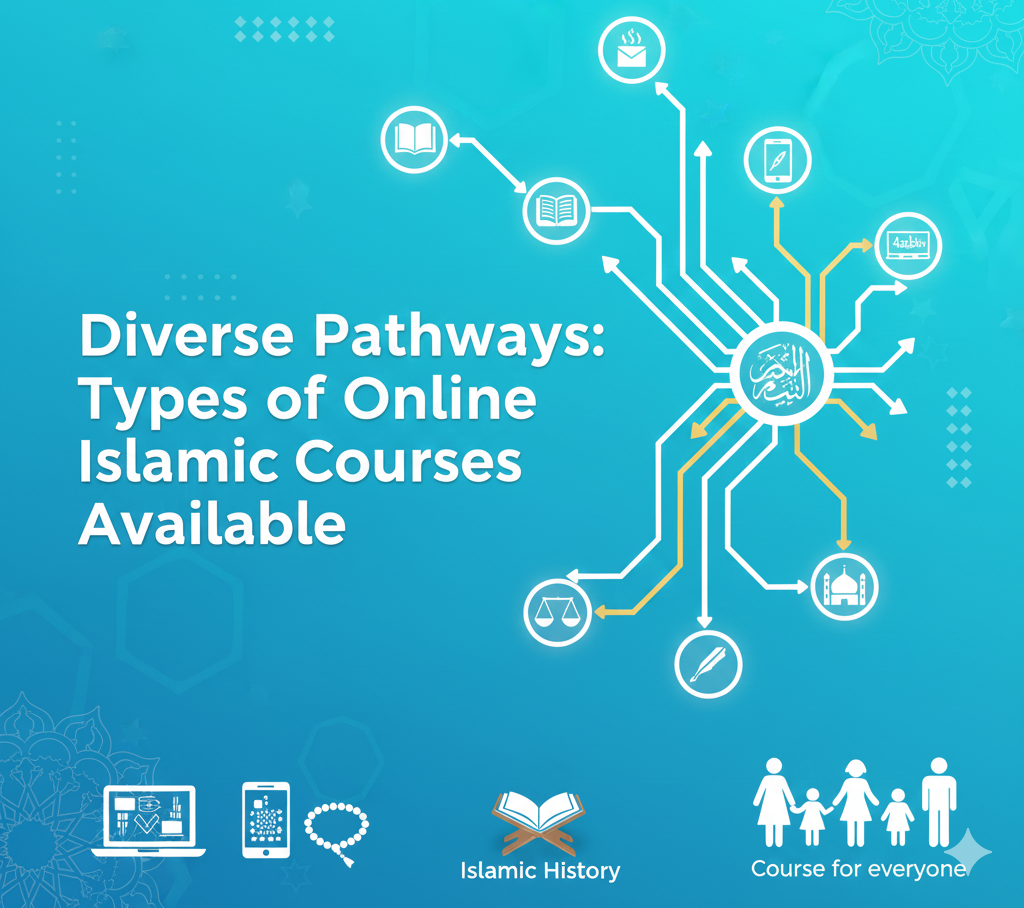
Diverse Pathways: Types of Online Islamic Courses Available
Digital Islamic learning is wonderfully diverse, offering structured programs that are suitable for students of all ages and backgrounds. Below are the most popular categories that cater to specific community needs:
1. Tailored Learning: Islamic Courses Online for Women
Many sisters seek a comfortable, supportive, and private learning environment to focus on their spiritual development. Platforms offering Islamic courses online for women understand these unique needs, providing specialized features such as:
- Women-only study groups and circles.
- Instruction from female teachers and scholars, fostering a comfortable learning atmosphere.
- Flexible timings specifically designed to accommodate mothers, students, and professionals.
- Specialized subjects like Muslim identity, modesty, marriage, Tafseer for women, and personal spiritual growth.
Institutions like Al Huda Network are known for offering women-friendly classes that are structured but gentle, allowing every sister to learn at her own pace and with full confidence.
2. Building Foundations: Islamic Courses Online for Kids
Children thrive with engaging and age-appropriate Islamic education. Online platforms are now excelling at delivering this through:
- Fun and interactive Quran learning.
- Tajweed basics taught using visuals, songs, and repetition.
- Essential Islamic manners & daily duas (supplications).
- Beginner Fiqh (jurisprudence) and inspiring stories of the Prophets.
- Hifz (memorization) tracking programs and dedicated sessions.
- Safe, child-friendly online environments that maintain focus.
Early Islamic study helps children grow into confident, spiritually grounded, and knowledgeable Muslims.
3. Global Access: Islamic Online Courses in English
With the immense growth of English-speaking Muslim communities, accessing online Islamic study in English has become absolutely essential. These programs are specifically designed to:
- Simplify Arabic Islamic terminology into clear English concepts.
- Help new Muslims (reverts) understand Islam step-by-step.
- Support Western-born youth in connecting with their heritage.
- Offer clear, non-complex language, ensuring deep comprehension.
This opens the door for anyone who wants to learn about Islam without the barrier of language.
4. 🇬🇧 Locally Relevant: Islamic Courses Online UK
For Muslims living in the UK, the focus is on culturally relevant and convenient learning. Courses marketed as Islamic Courses Online UK offer unique, beneficial features:
- Classes scheduled specifically in UK time zones.
- UK-based teachers who deeply understand the local cultural and social context.
- Relevant Fiqh discussions covering topics like mortgages, halal income, and navigating school environments.
- Connection with trusted UK Islamic organizations like Al Huda Network.
UK Muslims can finally access reliable Islamic education that is perfectly tailored to fit their lifestyle.
5. Focused Learning: Short Islamic Courses
Short Islamic courses online are the perfect solution for those seeking quick, highly-focused Islamic knowledge refreshers. These are ideal for busy Muslims who want to commit without taking on a multi-year program:
- Intensive weekend workshops.
- Mini-courses on essential practices like salah (prayer), purification, or Islamic manners.
- Short Tafseer series focusing on key surahs.
- Introductory Arabic courses or compact Islamic history programs.
These programs offer a simple yet effective entry point into consistent Islamic study
The Core Curriculum: Essential Islamic Knowledge Areas to Learn
The backbone of Islamic education is not just about memorization; it’s about building a holistic, well-rounded understanding of your faith. When you enroll in an online Islamic course, ensure the program is rooted in these foundational subjects:
1. Quran Studies & Tafseer (Exegesis)
This goes beyond simple recitation. It involves deep study to truly grasp the Quran’s divine message, its historical context (asbab al-nuzul), and its practical application in modern life. Understanding Quranic interpretation is the first step to becoming a knowledgeable Muslim.
2. Hadith & Sunnah (Prophetic Tradition)
The Sunnah is the living example of the Prophet Muhammad (peace and blessings be upon him). Studying Hadith is essential for interpreting the Quran and learning the authentic Prophetic teachings that shape Muslim worship and character.
3. Fiqh (Islamic Jurisprudence)
Often called Islamic Law, Fiqh provides the practical rulings concerning all aspects of a Muslim’s life: from the correct performance of worship (Ibadat), to daily transactions, finance, and complex family matters. This subject ensures your actions align with Sharia principles.
4. Arabic Language (The Key to Understanding)
Since the foundational texts of Islam are in Arabic, learning the Classical Arabic language is a key discipline. It is the direct path to unlocking deeper, independent comprehension of the Quran and Sunnah, enriching your Islamic scholarship.
5. Islamic History & Civilization
This area offers profound insight into the development of the Ummah (global Muslim community). Studying Islamic history helps you understand the Muslim world‘s contributions to science, culture, and ethics, giving you a strong sense of identity and legacy.
6. Aqeedah (Islamic Creed)
The starting point for every Muslim. Aqeedah deals with the core, foundational Islamic beliefs about Allah (God), the angels, the prophets, destiny, and the unseen realm. Mastering this ensures your entire framework of belief is sound and authentic.
Your Personalized Path: How to Choose the Right Online Islamic Course
Selecting the right program is the single most important step to ensuring long-term success and profound benefit from your studies. Don’t just pick a course; choose an entire learning journey that is tailored to you.
Follow these essential steps when evaluating your options for an online Islamic course :
1. Honestly Assess Your Starting Level
Begin by accurately determining your current proficiency: Are you a beginner seeking foundations, an intermediate student ready for depth, or an advanced learner targeting specialization? Knowing your starting point is key to effective placement.
2. Set Specific, Clear Learning Goals
Before enrolling, define exactly what you want to achieve. Is your main goal mastering Quranic recitation, achieving fluency in Arabic language, specializing in a school of Fiqh, or building comprehensive Islamic knowledge? Clear goals drive focused learning.
3. Verify Teacher Credentials and Qualifications
The authenticity of your education depends entirely on the source. Always scrutinize the teachers’ credentials, qualifications, and ijazahs (certifications). Look for certified scholars who bring reliable Islamic scholarship to the platform.
4. Prioritize UK-Friendly Class Timings
Since online learning is about flexibility, ensure the scheduled classes are convenient for your local time zone. Look for platforms that are considerate of UK Muslims and their daily commitments.
5. Consult Verified Student Reviews
Read honest, independent student feedback to gain insight into the actual classroom experience, the effectiveness of the teaching style, and the platform’s administrative support.
6. Inquire About Certification and Accreditation
For those pursuing formal Islamic education, check if the course offers recognized certificates or verifiable documentation upon completion. This validates your effort and achievement.
7. Evaluate the Platform’s Structure and Materials
Examine the course structure, the learning pace, and the quality of the provided Islamic study materials. Does the platform use high-quality, engaging content that supports your learning style?
If you are unsure where to begin or need help with course placement, we encourage you to reach out for personalized guidance
A Global Ummah: Benefits of Online Islamic Learning
The rise of digital education is not just a convenience; it is fundamentally transforming the Muslim community by removing geographic boundaries and fostering a unified global identity.
Here are the profound ways online learning is benefiting the entire Ummah:
1. Fostering International Collaboration and Unity
Digital classrooms serve as virtual gathering places, connecting Muslims from different cultures, backgrounds, and time zones. This access provides international collaboration on studies, helping to build a deeper, shared understanding and sense of global Muslim unity.
2. Safeguarding and Preserving Authentic Knowledge
Digital platforms ensure that high-quality, authentic Islamic knowledge rooted in the Quran and Sunnah is preserved, cataloged, and made accessible worldwide. This helps combat misinformation and promotes adherence to sound Islamic principles.
3. Supporting Busy Professionals and Lifelong Learners
For the dedicated Muslim professional juggling a demanding career, the flexibility of online courses is indispensable. It helps busy Muslims continue their spiritual development and pursue lifelong learning without the need to sacrifice their commitments.
4. Cultivating a Strong Global Muslim Identity
By studying alongside peers from Karachi to London to New York, learners develop a broader understanding of the Ummah’s diversity and challenges. This interaction strengthens a unified global Muslim identity built on shared faith and learning.
5. Equalizing Educational Opportunity
Online platforms democratize Islamic education by offering equal learning opportunities to Muslims of all ages, financial backgrounds, and geographic locations. Whether you are a senior citizen or a young mother, reliable Islamic scholarship is now within reach.
Taking the Plunge: Getting Started With Your Islamic Studies Journey
The hardest part of any major endeavor is often simply starting. However, approaching your new online Islamic course with the right mindset and strategy will make the journey both easy and deeply rewarding.
Here’s your practical roadmap for success in Islamic study:
1. Set a Clear and Pure Intention (Niyyah)
Before opening any book or logging into your first class, renew your heart’s purpose. Ensure your intention (niyyah) is solely for the sake of Allah (SWT). A pure niyyah is the foundation of all good deeds and will be the biggest source of motivation on your Islamic learning journey.
2. Design a Realistic Weekly Study Schedule
Don’t overcommit! Create a realistic study schedule that genuinely fits your modern lifestyle. Consistency beats intensity. Whether it’s 30 minutes before work or an hour after dinner, block out non-negotiable time for your Islamic knowledge acquisition.
3. Find Community: Join Online Study Circles
Don’t study in isolation. Actively seek out and join online study circles or discussion groups connected to your Islamic courses online. This provides accountability, motivation, and a communal environment (halaqa) that enhances learning and builds your global Muslim identity.
4. Practice Makes Perfect: Apply What You Learn
The true measure of Islamic scholarship is application. Immediately apply the lessons you learn—whether it’s a ruling of Fiqh regarding Salah (prayer) or a behavioral lesson from the Sunnah to your daily life. This turns knowledge into wisdom and action.
5. Embrace Consistency, Not Perfection
Stay absolutely consistent, even on busy days. If you can only manage 15 minutes of Quranic recitation or review a few duas, that small, continuous effort is far better than sporadic marathon sessions. Consistency is the secret to mastery in any Islamic course.
6. Track Your Progress and Celebrate Milestones
Keep a journal or use a digital tool to track your progress. Seeing how far you’ve come mastering a new surah, understanding a complex Hadith, or completing a module—provides positive reinforcement and fuels your commitment.
🔎 Quality Assurance: Top Features to Look for in Online Islamic Course Platforms
Choosing the right online Islamic course provider means choosing a partner for your Islamic learning journey. Beyond the curriculum, the platform’s features determine your day-to-day success and engagement.
When evaluating potential options, look for these key indicators of quality:
1. Flexible Delivery: Live Classes + Recorded Videos
The best platforms offer a blended approach. Seek out platforms that provide live, interactive classes for community engagement, coupled with recorded video archives for convenient review, revision, and catch-up sessions.
2. Technical Accessibility: Mobile-Friendly Learning
Your study should not be tied to a desktop. Ensure the platform offers a dedicated mobile app or a fully mobile-friendly website. This technical accessibility allows for seamless Islamic study on the go, fitting learning into your busiest moments.
3. Authenticity Guarantee: Qualified Scholars and Ijazahs
Demand the highest standards for instruction. Always verify that the instructors are qualified scholars who possess recognizable credentials and, ideally, ijazahs (authorizations) to teach the material. This ensures authentic Islamic knowledge transmission.
4. Validation of Effort: Robust Certification Options
If you are committing serious time to Islamic education, check for certification. Platforms should offer meaningful certification options upon completion, validating your hard work and demonstrating your acquired Islamic scholarship.
5. Interactive Learning: Community Discussion Forums
Online learning does not have to be isolating. Look for platforms that facilitate community discussion forums or virtual halaqat. These features are essential for peer-to-peer interaction, asking questions, and building a sense of global Muslim unity.
6. Direct Support: Access to Instructors
Personal guidance is invaluable. Ensure there is a clear channel for access to instructors (e.g., dedicated Q&A sessions, direct messaging) to clarify doubts and seek personalized advice on your Islamic studies.
7. Clear Structure: A Cohesive Curriculum
A fragmented experience leads to confusion. The platform must offer a structured curriculum that progresses logically from foundational concepts to advanced Islamic subjects, ensuring a comprehensive and complete learning experience.
8. Supportive Resources: Quizzes, PDFs, and Flashcards
Effective learning relies on reinforcement. Look for platforms that go beyond video content by providing practical Islamic study resources like downloadable PDFs, self-assessment quizzes, and flashcards to aid memorization and revision.
You will find that institutions like Al Huda Network include many of these powerful, student-focused features.
Conclusion: Your Islamic Learning Journey Awaits
Online Islamic courses have truly revolutionized the way the Ummah connects with its faith, opening a profound new opportunity for every Muslim to strengthen their connection with Allah (SWT) and gain reliable Islamic knowledge from any corner of the Muslim world.
Whether you’re a beginner taking your first steps, a parent focused on your children’s spiritual development, a busy professional, a dedicated student, or a new Muslim (revert)—know that there is an online Islamic course perfectly designed to meet your needs and aspirations.
Don’t wait for the perfect moment. Start your journey today. Set your pure niyyah, seek Islamic knowledge consistently, and build the daily habits that bring you closer to Allah (SWT).
Your path to learning Islam starts with a single step—and with the resources available today, that step can happen right now. May Allah grant you success in your studies and guide you to mastery in your Islamic course.