
What Are Sunnah Prayers?
Sunnah prayers, also known as Sunnah salah or rawatib prayers, are voluntary prayers in Islam that the Prophet Muhammad (peace be upon him) regularly performed alongside the obligatory fard prayers. They’re not mandatory like the five daily fard salah, but they’re highly recommended as part of the Prophet Muhammad’s Sunnah, turning everyday routines into acts of Islamic worship. Think of them as extra prayers that complement your fard obligations, helping build taqwa and closeness to Allah.
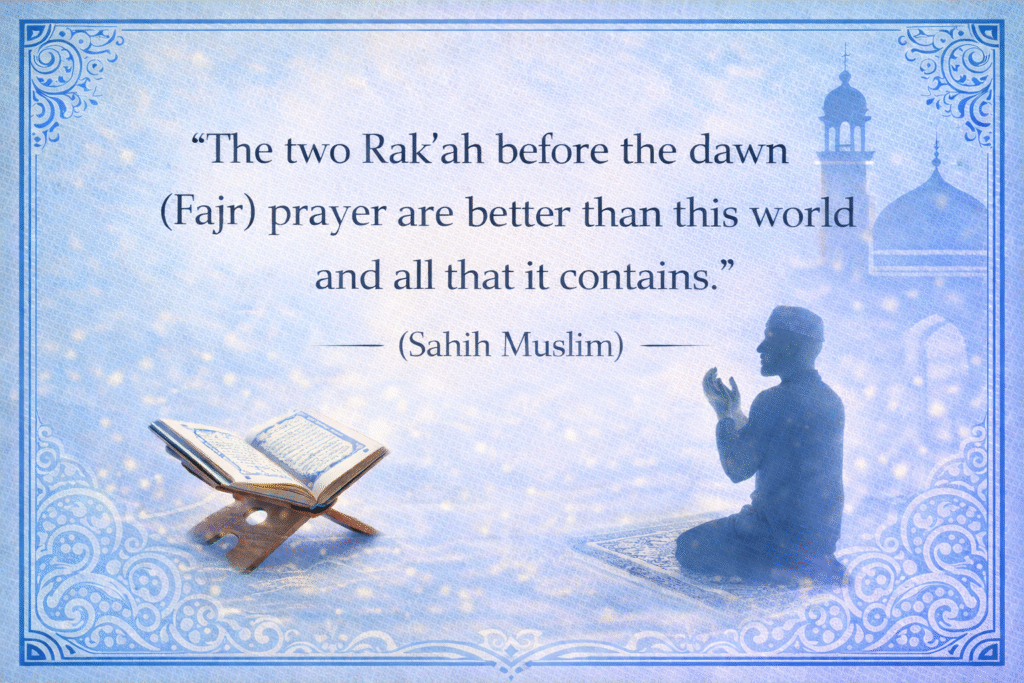
What makes Sunnah prayers essential today? In a fast-paced world, they offer spiritual growth and rewards that can outweigh worldly gains. For instance, an authentic hadith from Sahih Muslim (725) and Jami’ at-Tirmidhi (416) states
“The two rak’ahs before the dawn (Fajr) prayer are better than this world and all it contains.”
That’s huge—imagine starting your day with dawn prayers that hold more value than everything material! Another from Sahih Muslim (657) adds:
“He who performs Fajr prayer will be under the protection of Allah.”
These prayer virtues highlight why Sunnah prayers benefit include forgiveness, protection, and inner peace.
If you’re new to this, Sunnah prayers differ from nafl prayers (general voluntary rakats) by being specifically tied to the Prophet’s practice. They’re a key part of Quran learning and Islamic studies, often taught in online Quran classes or Hifz programs. At places like an online Quran academy, qualified tutors can guide you through them with Tajweed rules for proper Quran recitation. The importance of Sunnah prayers in daily life can’t be overstated—they’re like a spiritual booster, especially for kids and adults alike.
Types of Sunnah Prayers (Mu’akkadah vs. Ghair Mu’akkadah)
Sunnah prayers come in various types, making it easy to incorporate them into your schedule. The main categories are Sunnah muakkadah (emphasized Sunnah, which the Prophet rarely missed) and Sunnah ghair muakkadah (non-emphasized Sunnah, which he performed occasionally). Understanding the difference between Sunnah muakkadah and ghair muakkadah helps prioritize your daily Sunnah prayers.
Rawatib prayers are the regular ones attached to the five fard salah—these are mostly muakkadah. Other types include night prayers like Tahajjud prayer, forenoon ones like Duha prayer, and the odd-numbered Witr prayer. For example, emphasized Sunnah includes the Fajr Sunnah (2 rak’ahs before), while non-emphasized Sunnah might cover extra voluntary rakats like 4 before Asr (from Jami’ at-Tirmidhi 395:
“May Allah have mercy on one who prays 4 raka’aat before the ‘Asr Prayer”).
Hadith on Sunnah prayers emphasize their types for clarity. In Sahih Bukhari (Volume 2, Book 21, Hadith 241), Aisha (may Allah be pleased with her) narrated that the Prophet used to offer thirteen rak’ahs of night prayer, including Witr and two rak’ahs Sunna of Fajr. This shows how types of Sunnah prayers blend into a holistic routine. If you’re in an Hifz program or taking Arabic classes, learning these distinctions through personalized learning with multilingual teachers can make it stick.
Nafl vs Sunnah prayers differences? Nafl are broader extra prayers, while Sunnah are specifically from the Prophet’s example. For women, female Quran teachers often highlight how these fit into home tuition or Skype classes, ensuring flexible timings for all.
Complete List of Daily Sunnah Rak’ahs with Times
Ready for the practical side? Here’s a complete list of Sunnah rakahs for each prayer, with Sunnah prayer times adjusted for real life—especially in the UK with its varying daylight. These daily Sunnah prayers total around 20 Sunnah rakats for massive rewards, as per an authentic hadith.
Use this table for quick reference:
| Prayer | Sunnah Before (Rak’ahs) | Sunnah After (Rak’ahs) | Notes |
| Fajr (Dawn Prayers) | 2 (Sunnah before Fajr) | None | Muakkadah; pray quietly before fard. Time: Pre-dawn. |
| Dhuhr (Noon Prayers) | 4 (Sunnah before Dhuhr and 2 after) | 2 nafl | Muakkadah. |
| Asr (Afternoon Prayers) | 4 (Asr Sunnah—ghair muakkadah) | None | Optional but rewarding; late afternoon. |
| Maghrib (Sunset Prayers) | None | 2 (Maghrib Sunnah) | Muakkadah; right after fard, and 2 Nfl after |
| Isha (Evening Prayers) | 4 ghair muakkadah | 2 (Isha Sunnah) + Witr | Muakkadah for the 2; Witr as Sunnah or wajib per some scholars. Nighttime. |
How many Sunnah rakats for each prayer? The core 20 Sunnah rakats (muakkadah and ghair muakkadah) come from Sunnah prayers before and after fard. An authentic hadith from Jami’ at-Tirmidhi (379) confirms:
“Allah will build a house in Heaven for whoever is diligent in observing Sunnah Rak’ats.” This house in Jannah hadith motivates consistent practice.
For other Sunnah prayers list with times: Tahajjud (night prayers, 2-12 rak’ahs after midnight), Duha (2-12 rak’ahs mid-morning), and more. In online sessions with certified teachers, you can practice these via interactive learning or multimedia learning tools.
Authentic Hadith on the Rewards and Virtues of Sunnah Prayers
The rewards of Sunnah prayers are mind-blowing, backed by authentic hadith that promise paradise rewards and more. Let’s break it down with direct quotes.
For specific ones, Sunnah prayers’ benefits shine in Fajr Sunnah: Sahih Muslim (725) and Jami’ at-Tirmidhi (416) state:
“The two Rak’ah before the dawn (Fajr) prayer are better than this world, and all it contains.”
Imagine that—better than all worldly wealth!
Tahajjud prayer virtues: Sahih Bukhari (1140) from Aisha: The Prophet offered eleven or thirteen rak’ahs at night, including Witr. Benefits of the Tahajjud Sunnah prayer include answered du’as and forgiveness.
Duha prayer timing and rakats (2-12, mid-morning): Though the Prophet didn’t always pray it (Sahih Bukhari, from Aisha), its rewards include charity for every joint in your body.
Hadith from Bukhari on Sunnah prayers, like Tirmidhi hadith on 20 rakahs Sunnah, show how Sunnah complements fard prayers. How do Sunnah prayers build taqwa? They foster discipline and remembrance, leading to spiritual growth. In Tafseer courses or Ijazah courses, these hadith are often explored for deeper insight.
How to Perform Sunnah Prayers Step by Step
Performing Sunnah prayers is straightforward, similar to fard but with some tweaks. Here’s a Sunnah prayer guide for beginners.
- Make niyyah (intention) for the specific Sunnah, like “I intend to pray 2 rak’ahs Sunnah before Fajr.”
- Start with takbir (Allahu Akbar).
- Recite Surah Al-Fatiha and a short surah—Sunnah prayers recitation rules: Silent for day prayers (like Dhuhr Sunnah), aloud or silent choice for night prayers.
- Follow rukoo, sujood, etc., just like fard.
- End with tasleem after 2 rak’ahs (or more for sets like 4 before Dhuhr).
For example, how to perform Sunnah prayers step by step for Fajr Sunnah: Stand facing qibla, niyyah, takbir, recite quietly, complete two rak’ahs. Authentic hadith on voluntary prayers encourage this, like the Prophet’s encouragement for extra rakats.
Common tweaks: No adhan/iqamah needed; pray individually. In live classes or one-to-one classes with online tutors, practice with feedback on Tajweed. Affordable lessons make it accessible for kids, adults, or even female Quran teacher sessions.
Sunnah Prayers in Modern UK Life: Challenges and Solutions
Living in the UK? Sunnah prayers for beginners in the UK can feel tricky with long summer days or short winters affecting Sunnah prayer times. But integrating Sunnah into busy schedules is doable—start small, like the 2 Sunnah before Fajr during your morning routine.
Challenges: Work or school might clash with noon prayers or afternoon prayers. Solutions: Use flexible timings from apps (multilingual content helps), or pray Sunnah during travel (shorten if needed). UK seasonal timing for Sunnah prayers? In winter, Duha prayer timing shifts earlier; apps with technical support can notify you.
For families, teaching kids Sunnah prayers through interactive Quran learning for kids builds habits early. Online Quran classes for beginners offer parental monitoring and 24/7 support. Sunnah prayers during travel? Authentic hadith allow combining, keeping your practice consistent.
Women’s Considerations in Sunnah Prayers
Sunnah prayers for women at home are empowering, with the fiqh of Sunnah prayers explained, considering hayd or nifas—pause during those times, but resume with ghusl. Women’s perspectives on Sunnah salah often highlight praying in privacy, like at home tuition.
Hadith encourage it: The Prophet praised women’s voluntary prayers, equating rewards. Female Quran tutor for women sessions in affordable online Tajweed courses makes learning tailored, ensuring certification and genuine certification from England.
Common Mistakes and How to Avoid Them
Even seasoned folks slip up—common mistakes in Sunnah prayers include skipping muakkadah like Dhuhr Sunnah, or mixing aloud/silent rules. Making up missed Sunnah prayers? Yes, but they’re not obligatory like fard.
Avoid by following a Sunnah prayers checklist: Use an online Quran memorization journey. Student testimonials from the Quran academy to help correct these.
Tech and Tools for Enhancing Sunnah Practice
Boost your practice with digital tools for Sunnah prayers—cross-platform Quran apps for reminders, full-time academic support via online sessions. Online courses on Sunnah salah, like those in Arabic language classes for adults, integrate multimedia learning.
Sunnah prayers and mental peace? Tracking via apps fosters consistency. For global access to authentic Islamic education that helps practice sunnah in everyday life.
If You find it usefull you can read this article as well
Frequently Asked Questions (FAQs)
What are Sunnah prayers in Islam?
Sunnah prayers are Voluntary acts following the Prophet’s example, enhancing daily worship.
How many Sunnah rakats for each prayer?
20 rakat muakkadah and ghair muakkadah are total sunnah in daily, as listed.
When are Sunnah prayers before and after fard?
There are at both sides, before and other are after.
What is Rewards of Sunnah prayers daily?
The reward of sunnah is a House in Paradise, as directed in Tirmidhi.
What is the difference between Sunnah muakkadah and ghair muakkadah?
Sunnah muakkadah (emphasized Sunnah, which the Prophet rarely missed) and Sunnah ghair muakkadah (non-emphasized Sunnah, which he performed occasionally).
How to perform Sunnah prayers step by step?
Same as we do other farz prayers with the intention of sunnah.
How to start Sunnah prayers as a beginner in the UK?
You can start with 2 sunnahs of Fajr.
Is it necessary to make up missed Sunnah prayers?
It is recommended but not required.
How can i Integrate Sunnah into busy schedules?
You can start with something very small.
More Than Extra Rak‘ahs: The Hidden Beauty of Sunnah Prayers
In the end, Sunnah prayers are much more than extra rak’ahs—they are a loving invitation from the Prophet Muhammad ﷺ to draw closer to Allah every single day. Whether it’s the quiet 2 rak’ahs before Fajr that outweigh the entire world, the promise of a house in Jannah for consistent practice, or the gentle discipline of Tahajjud in the stillness of night, these voluntary prayers transform ordinary moments into acts of profound worship and spiritual growth.
As we’ve seen through authentic hadith from Bukhari, Muslim, and Tirmidhi, the rewards of Sunnah prayers are immense: forgiveness, protection, answered du’as, and a deeper sense of peace that carries you through life’s challenges—especially in our busy UK lives.
If reading this has inspired you to start (or strengthen) your Sunnah practice, know that you’re not alone. Many of our students at Al-Huda Network began exactly where you are—curious, motivated, and ready to take the next step.
We’d love to support you on this beautiful journey. Our UK-based online Quran academy offers personalized one-on-one lessons in Tajweed, Fiqh, and daily Sunnah integration, with flexible timings perfect for families, working adults, and beginners alike. Start with our free trial Quran classes online—no pressure, just authentic guidance to help you live Islam with confidence and joy.
May Allah make us among those who consistently perform the Sunnah prayers and reap their endless rewards. Ameen.