
1. Why Tajweed Matters in Qur’an Recitation
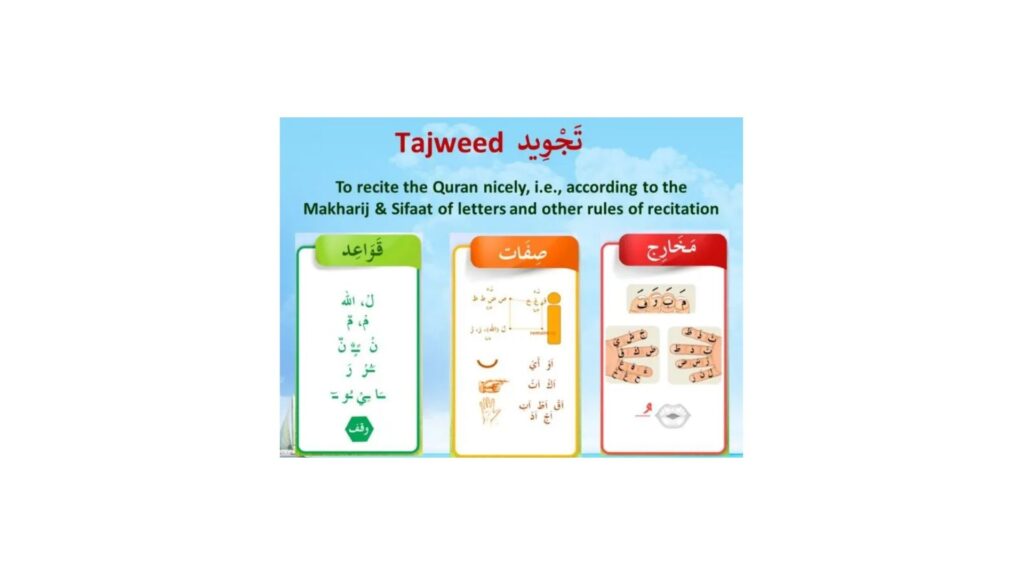
Tajweed is the science that governs how the Qur’an is recited, ensuring every letter is pronounced correctly and beautifully. Rooted in Qur’anic phonetics, Tajweed focuses on the precise articulation of sounds, their characteristics, and their interaction with one another. It is not merely about melody, but about accuracy — giving each letter its full right from its correct point of articulation.
Accurate pronunciation is essential because even a slight change in sound can alter the meaning of a word in Arabic. Tajweed protects the Qur’an from such distortion, preserving the divine message exactly as it was revealed. Through proper phonetics, rhythm, and articulation, Tajweed safeguards both the linguistic integrity and the spiritual impact of Qur’anic recitation.
Allah commands measured and deliberate recitation in the Qur’an:
“And recite the Qur’an with measured recitation.” (Surah Al-Muzzammil 73:4)
This verse highlights that recitation is an act of worship requiring care, awareness, and adherence to established rules.
This naturally leads to an important question for every learner of the Qur’an: What are the 7 rules of Tajweed in the Qur’an, and how do they help us recite the Book of Allah correctly and confidently?
2. What Is Tajweed? (Meaning in English & Arabic)
2.1 Definition of Tajweed
The word Tajweed comes from the Arabic root jawwada (جوّد), which means to improve, beautify, or perfect something. Linguistically, Tajweed refers to doing an action with precision and excellence, ensuring that it is carried out in the best possible manner.
In its technical Islamic meaning, Tajweed is the application of specific phonetic rules when reciting the Qur’an, so that every letter is pronounced from its correct point of articulation and with its proper characteristics. These rules reflect the exact manner in which the Qur’an was revealed to the Prophet Muhammad ﷺ and transmitted through generations of skilled reciters. Tajweed ensures that the recitation remains faithful to its original form, free from errors that could affect meaning or clarity.
2.2 Tajweed as a Phonetic Science
Tajweed is deeply connected to phonetics, the study of speech sounds and how they are produced. Each Arabic letter has a defined point of articulation (makhraj), whether it emerges from the oral cavity, throat, tongue, lips, or nasal passage. Reciting without awareness of these articulation points can result in mispronunciation and confusion between similar sounds.
In addition to articulation, Tajweed also addresses phonetic attributes (sifaat) — such as whether a sound is whispered or vocalized, strong or soft, elevated or light. These attributes shape the acoustic properties of Qur’anic recitation, giving it balance, rhythm, and clarity. By observing both articulation points and sound characteristics, Tajweed transforms recitation from simple reading into a disciplined, precise, and spiritually resonant act of worship.
3. The Four Pillars of Tajweed
(What are the four pillars of Tajweed?)
The science of Tajweed is built upon four essential pillars that work together to ensure correct, clear, and beautiful Qur’anic recitation. Mastery of these pillars allows the reciter to preserve both the meaning and melodic balance of the Qur’an as it was revealed.
3.1 Makharij al-Huroof (Points of Articulation)
Makharij al-Huroof refers to the exact places from which Arabic letters originate. There are five primary articulation regions, each responsible for producing specific sounds accurately:
- Al-Jawf (Oral Cavity):
Produces the long vowel sounds (madd letters) that flow from the open mouth without obstruction. - Al-Halq (Throat):
Divided into upper, middle, and lower sections, this area produces deep and soft sounds that require careful control to avoid distortion. - Al-Lisan (Tongue):
The most complex articulation area, responsible for the majority of Arabic letters. Slight tongue movement differences can completely change meanings. - Ash-Shafatayn (Lips):
Letters formed by the lips, requiring precise closure or rounding to maintain clarity. - Al-Khayshum (Nasal Passage):
Responsible for nasality (ghunnah), producing the rhythmic humming sound in certain letters.
Correct articulation ensures that each letter is given its due right, preventing confusion between similar sounds.
3.2 Sifaat al-Huroof (Phonetic Attributes)
While makharij define where a sound comes from, sifaat explain how it sounds. These phonetic attributes shape the acoustic quality of recitation:
- Hams vs Jahr:
Whispered sounds versus fully vocalized sounds. - Shiddah vs Rikhwah:
Strong, stopped sounds compared to soft, flowing ones. - Istila vs Istifal:
Elevated, heavy letters versus light, lowered ones.
These attributes influence clarity, strength, and resonance, allowing the reciter to maintain balance without exaggeration or weakness.
3.3 Ahkam al-Huroof (Rules of Letters)
Ahkam al-Huroof governs how letters behave when they meet one another during recitation. Arabic letters do not exist in isolation; they interact dynamically based on their characteristics and positions.
These rules explain:
- When letters should be merged or pronounced clearly
- When sounds should be concealed or nasalized
- How transitions between letters remain smooth and precise
Understanding letter interaction prevents abrupt breaks, mispronunciations, and loss of rhythm.
3.4 Ahkam al-Madd wal-Qasr (Rules of Lengthening)
This pillar focuses on vowel control and beat duration. Some letters require natural lengthening, while others demand extended elongation depending on surrounding letters and symbols.
Key aspects include:
- Measuring sounds by beats (harakat)
- Maintaining consistency in length
- Avoiding rushed or exaggerated elongation
Proper application of madd and qasr preserves the flow, harmony, and measured pace of Qur’anic recitation.
4. What Are the 7 Rules of Tajweed?
(Core Tajweed Rules Every Qur’an Learner Should Know)
Understanding the seven rules of Tajweed provides a strong foundation for correct Qur’anic recitation. These rules combine pronunciation, sound characteristics, and rhythm to preserve the meaning and beauty of Allah’s words. Below is a clear, structured overview followed by concise explanations of each rule.
Overview: The Seven Rules of Tajweed
- Makharij – Correct letter pronunciation
- Sifaat – Letter characteristics
- Noon Sakinah & Tanween rules
- Meem Sakinah rules
- Ghunnah & Mushaddad letters
- Madd (lengthening rules)
- Qalqalah (echoing letters)
This list offers an easy reference for beginners while remaining grounded in authentic Tajweed science.
Rule 1: Makharij – Correct Letter Pronunciation
Makharij refers to the points of articulation from which Arabic letters originate. Every letter has a specific place of emergence, whether from the throat, tongue, lips, oral cavity, or nasal passage.
Correct articulation is essential because misplacing a letter can change its sound and meaning entirely. For example, letters that seem similar in writing may differ in pronunciation due to subtle tongue or throat positioning. Mastering makharij ensures accuracy, clarity, and respect for the Qur’anic text.
Rule 2: Sifaat – Understanding Letter Characteristics
Sifaat describe the inherent qualities of each letter and determine how it should sound during recitation.
Key contrasts include:
- Heavy vs light sounds, which affect depth and resonance
- Whispered (Hams) vs vocalized (Jahr) letters
- Strength and elevation, influencing sound flow and firmness
These characteristics shape the acoustic balance of recitation, preventing both exaggeration and weakness.
Rule 3: Noon Sakinah & Tanween Rules
This rule applies when Noon carries a sukoon or when a word ends with Tanween. Depending on the following letter, one of four rulings applies:
- Izhar (clarity): Clear and distinct pronunciation
- Idgham (merging): Assimilation into the next letter
- Iqlab (conversion): Transformation into a nasalized sound
- Ikhfa (concealment): Partial hiding with controlled nasalization
These rules maintain rhythmic balance and smooth transitions, ensuring clarity without harsh breaks.
Rule 4: Meem Sakinah Rules
When Meem carries a sukoon, its pronunciation depends on the following letter:
- Ikhfa Shafawi (labial concealment): Soft hiding with nasality
- Idgham Shafawi (labial merging): Full merging with another Meem
- Izhar Shafawi (labial clarity): Clear and open pronunciation
These rulings preserve lip control and prevent muddled sounds.
Rule 5: Ghunnah & Mushaddad Letters
Ghunnah is a nasal sound produced from the nasal passage and is essential in Tajweed. It is most prominent when Noon or Meem carries a shaddah.
Key points include:
- A consistent 2-beat ghunnah
- Balanced nasality without elongating the letter itself
- Smooth, rhythmic humming
This rule adds softness and flow to recitation while maintaining precision.
Rule 6: Madd (Lengthening Rules)
(What are the basic rules of Tajweed?)
Madd refers to lengthening vowel sounds for a specific number of beats. Proper timing prevents rushed or exaggerated recitation.
Main categories include:
- Madd Tabee‘i (natural): Two-beat extension
- Madd Waajib (compulsory): Extended length due to specific conditions
- Madd Jaa’iz (permitted): Flexible extension depending on stopping
Consistent beat counts ensure harmony and measured recitation.
Rule 7: Qalqalah (Echoing Letters)
Qalqalah creates a bouncing or vibrating sound when certain letters are pronounced with sukoon. This echo prevents letters from sounding weak or unclear.
There are two levels:
- Qalqalah Sughra (minor): Light echo within a word
- Qalqalah Kubra (major): Stronger echo when stopping
Qalqalah enhances acoustic clarity and distinguishes similar sounds at word endings.
5. What Are the 7 Heavy Letters in Tajweed?
In Tajweed, some Arabic letters are pronounced with heaviness, a quality known as Tafkheem. Understanding heavy letters is essential for maintaining the correct sound balance in Qur’anic recitation and avoiding meanings being altered through incorrect pronunciation.
Definition of Heaviness (Tafkheem)
Tafkheem refers to the thick, full, and elevated sound produced when pronouncing certain Arabic letters. This heaviness occurs when the back of the tongue rises toward the roof of the mouth, giving the letter depth and strength. Tafkheem is closely linked to the phonetic attribute of Istila (elevation) and affects the resonance of the sound.
Opposite to tafkheem is Tarqeeq, where letters are pronounced lightly and softly. Applying the correct level of heaviness or lightness is crucial, as exaggeration or weakness can disrupt clarity and rhythm.
The Seven Heavy Letters Explained
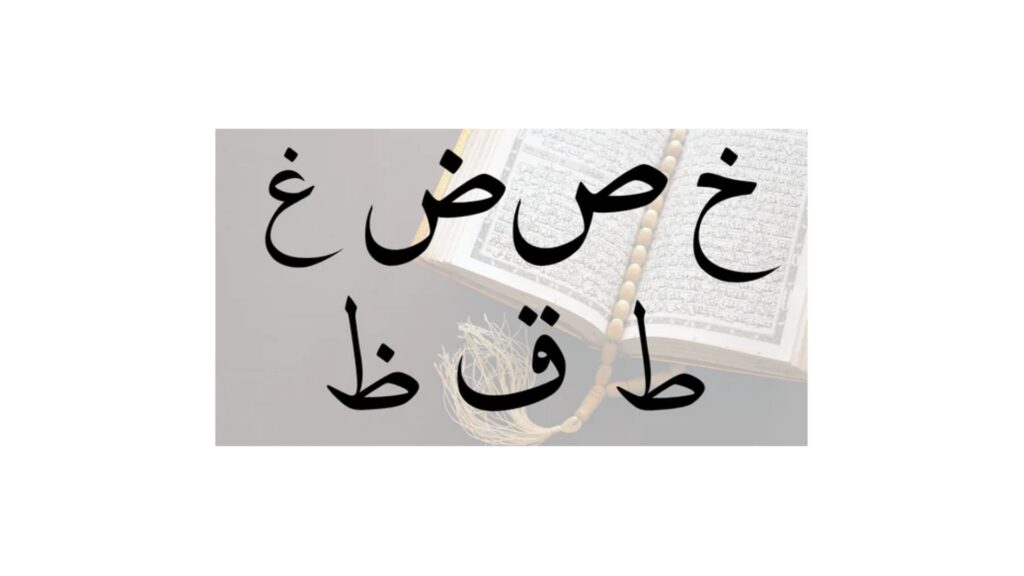
The seven heavy letters in Tajweed are commonly remembered through the phrase:
خُصَّ ضَغْطٍ قِظْ
These letters are:
- خ (Khaa)
- ص (Saad)
- ض (Daad)
- غ (Ghayn)
- ط (Taa)
- ق (Qaaf)
- ظ (Dhaa)
These letters carry inherent heaviness due to their elevated articulation and strong acoustic properties. When pronounced correctly, they produce a deep and powerful sound that distinguishes them from lighter letters.
Impact of Vowel Context on Sound Weight
The heaviness of these letters can increase or decrease depending on the vowel attached to them:
- Fatha (ـَ) creates the strongest heaviness
- Dammah (ـُ) produces moderate heaviness
- Kasrah (ـِ) softens the sound while maintaining heaviness
Additionally, surrounding letters and elongation rules can influence how heavy or light a sound appears. Mastering vowel interaction ensures balance, preventing both excessive thickness and unintended lightness.
6. The Seven Rules of Tajweed in Arabic vs English
Understanding Tajweed in both Arabic and English helps learners connect traditional terminology with practical application. While Arabic terms preserve scholarly precision, English explanations make Tajweed accessible to non-Arabic speakers and beginners.
6.1 The Seven Rules of Tajweed in Arabic (Brief Listing)
Below is a concise list of the seven rules of Tajweed in Arabic, presented without over-explanation to maintain clarity and authenticity:
- مخارج الحروف – Makharij al-Huroof (points of articulation)
- صفات الحروف – Sifaat al-Huroof (letter characteristics)
- أحكام النون الساكنة والتنوين – Rules of Noon Sakinah & Tanween
- أحكام الميم الساكنة – Rules of Meem Sakinah
- الغنة والحروف المشددة – Ghunnah and Mushaddad letters
- أحكام المد والقصر – Rules of lengthening and shortening
- القلقلة – Qalqalah (echoing letters)
These terms are commonly used by scholars and teachers of Tajweed and form the foundation of classical Qur’anic recitation.
6.2 The Seven Rules of Tajweed in English (Beginner Clarity)
For learners who are new to Arabic or Tajweed, the same rules can be understood in simpler terms:
- Where letters come from – learning correct mouth, tongue, and throat placement
- How letters sound – understanding strength, softness, heaviness, and lightness
- Rules for “n” sounds – when to pronounce clearly, merge, hide, or nasalize
- Rules for “m” sounds – proper lip control and clarity
- Nasal sounds – applying a steady two-beat hum where required
- Stretching vowels – knowing when and how long to extend sounds
- Echoing letters – giving certain letters a bounce when stopping or pausing
This English breakdown allows beginners to focus on practical recitation first, while gradually becoming familiar with Arabic terminology.
7. Common Tajweed Mistakes Beginners Make
Learning Tajweed is a gradual process, and mistakes are a natural part of the journey. Recognizing common errors early helps learners correct them before they become habits. Below are some of the most frequent Tajweed mistakes beginners make and why they should be avoided.
Ignoring Nasal Sounds
One of the most common mistakes is neglecting ghunnah, the nasal sound required in certain letters and situations. Beginners may rush through recitation or pronounce Noon and Meem without proper nasality. This removes the rhythmic balance of the recitation and affects clarity, especially in merged or concealed sounds.
Over-Stretching Vowels
Another frequent error is exaggerating vowel length. While some letters require elongation, stretching them beyond the prescribed beat count disrupts the measured flow of recitation. Over-stretching can blur word boundaries and take the recitation away from its intended rhythm.
Weak Articulation Points
Some learners pronounce letters from the wrong point of articulation, especially letters that share similar shapes or sounds. This weakness can cause confusion between letters and, in some cases, alter meanings. Clear awareness of tongue, lip, and throat placement is essential for accuracy.
Confusing Echoing with Elongation
Beginners sometimes mistake qalqalah (echoing) for madd (lengthening). Echoing requires a brief bounce or vibration, not an extended sound. Treating qalqalah letters like elongated vowels weakens their clarity and changes the acoustic effect intended in recitation.
These mistakes are common, but they are also easily corrected with attentive listening, slow recitation, and proper guidance. Progress in Tajweed comes through patience, repetition, and consistent practice.
8. How to Teach Kids Tajweed Effectively
Teaching Tajweed to children requires patience, consistency, and methods that match their developmental stage. When taught correctly, Tajweed becomes enjoyable rather than overwhelming, helping children build a lifelong connection with the Qur’an.
Age-Appropriate Phonetic Learning
Children learn sounds before rules. Introducing Tajweed through simple phonetic awareness—such as recognizing where sounds come from in the mouth or throat—helps them develop correct pronunciation naturally. Technical terminology can be introduced gradually as their understanding grows.
Listening Before Reading
One of the most effective ways to teach kids Tajweed is listening before reading. Children absorb correct pronunciation by hearing skilled reciters repeatedly. This mirrors how the Qur’an was originally transmitted and allows children to internalize rhythm, tone, and articulation without pressure.
Repetition and Short Lessons
Young learners benefit from short, focused sessions rather than long lessons. Repeating small portions of recitation daily helps reinforce correct sounds and build confidence. Consistency matters more than length, and gentle correction encourages steady progress.
Visual and Auditory Reinforcement
Using visual cues such as color-coded texts, mouth-position diagrams, or hand gestures helps children connect sounds to actions. Pairing this with auditory reinforcement, like replaying the same verses from reliable reciters, strengthens memory and accuracy.
Teaching kids Tajweed is not about perfection, but about nurturing love, confidence, and correct habits from an early age. With the right approach, children grow comfortable reciting the Qur’an with clarity and care.
9. Learning Tajweed the Right Way
Guided learning and regular correction are essential for mastering Tajweed. Listening to skilled reciters and receiving teacher feedback helps correct subtle errors in articulation, nasal sounds, and vowel timing.
Al Huda Network offers structured Qur’an learning for children and adults, combining patient guidance with listening-based practice. Gradual, consistent learning builds confidence and ensures Tajweed becomes a natural and rewarding part of Qur’anic recitation.
10. Frequently Asked Questions About Tajweed
Q1: What are the basic rules of Tajweed?
The basic rules include correct letter pronunciation (makharij), understanding letter characteristics (sifaat), proper application of Noon and Meem Sakinah, Ghunnah, Madd (lengthening vowels), and Qalqalah (echoing letters). Mastering these ensures clear, measured, and beautiful recitation.
Q2: Is Tajweed mandatory for all Muslims?
Yes, reciting the Qur’an with Tajweed is highly recommended for every Muslim. It preserves the Qur’an’s meaning and enhances the spiritual experience of recitation. Even beginners are rewarded for their efforts, even if perfection is not yet achieved.
Q3: Can Tajweed be learned without Arabic fluency?
Absolutely. Tajweed focuses on pronunciation, rhythm, and phonetic rules, which can be learned through listening, repetition, and teacher guidance. Arabic fluency is helpful but not required to begin mastering correct recitation.
11. Tajweed as a Lifelong Act of Worship
Tajweed is about precision, not perfection. Every effort to recite the Qur’an correctly, even when learning, is recognized and rewarded by Allah.
Beyond technical rules, Tajweed deepens the spiritual connection to the Qur’an, turning recitation into an act of worship. By practicing consistently, listening attentively, and seeking guidance, learners of all ages can grow confident, improve steadily, and enjoy the beauty of the Qur’an for a lifetime.